

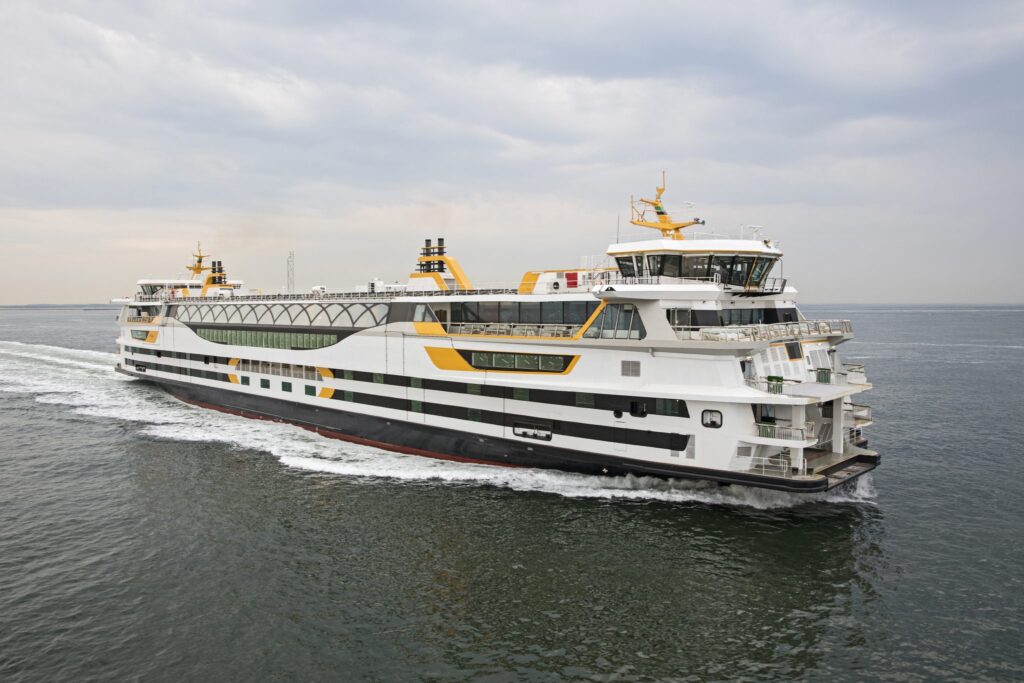
OLIVER DESIGN CONCLUYE EL PROYECTO “LLAVE EN MANO” DE HABILITACION Y DISEÑO DE ESPACIOS INTERIORES DEL FERRY “TEXELSTROOM”, CONSTRUIDO EN EL ASTILLERO LA NAVAL DE SESTAO
- Se trata de un contrato en el que la compañía especializada en diseño y arquitectura naval ha invertido más de un año y medio de trabajo y ha empleado a más de un centenar de profesionales de diferentes gremios
- A partir de un diseño vanguardista de la firma holandesa Vripack, OLIVER DESIGN ha realizado los planos constructivos de todas las áreas destinadas al pasaje y la tripulación, adaptándolos a los rigurosos requisitos navales
- Junto a la utilización de nuevos materiales e instalación de mobiliario 100% a medida, la zona de pasajeros destaca por su imaginativo diseño, inspirado en la flora y fauna de la costa neerlandesa en la que operará el ferry
- Una guardería que simula la arena de la playa, paneles decorativos de la avifauna local con iluminación interior o un gran árbol desnaturalizado en una de las galerías son algunos de sus elementos más originales

Getxo, 11 de abril de 2016.- OLIVER DESIGN, empresa especializada en diseño y arquitectura naval con sede en Getxo (Bizkaia), acaba de concluir el proyecto “llave en mano” de habilitación y diseño de interiores del ferry “Texelstroom”, construido por el astillero La Naval de Sestao para el armador neerlandés TESO. El buque abandonará en los próximos días el puerto de Santander, donde se han llevado a cabo los últimos trabajos de acabado de los interiores del buque, con destino a Den Helder, el puerto holandés de destino donde concluirá su puesta a punto antes de su entrada en servicio.
El “Texelstroom” es un ferry único en su género por varios motivos: su diseño simétrico de doble proa, la utilización de gas natural comprimido como combustible y de paneles solares para hacerlo más eficiente en el consumo de energía, y el hecho de ser el primer navío de estas características que se construye en La Naval. A todo ello hay que añadir un diseño de interiores extraordinariamente llamativo y vanguardista, ideado por la firma neerlandesa Vripack, de reconocido prestigio internacional en el diseño de yates.
La empresa vasca OLIVER DESIGN ha sido la encargada de habilitar y hacer realidad ese diseño, adaptándolo a las rigurosas normativas de seguridad vigentes en el transporte marítimo, y ofreciendo asimismo un acabado robusto y duradero para un buque capaz de transportar 1.750 viajeros y de realizar varios trayectos por día. El ‘Texelstroom»’ está diseñado para el tránsito continuo y muy elevado de pasajeros y vehículos entre el puerto neerlandés de Den Helder y Texel, la más grande de las islas Frisias, que cuenta con diversos atractivos turísticos, como una reserva natural y sus extensas playas. El trayecto a cubrir es corto, de algo más de dos millas marinas, con lo que el ferry puede completar un viaje de ida y vuelta en apenas una hora.

Un año y medio de trabajo
La adecuación de las áreas destinadas al pasaje y a la tripulación ha supuesto un contrato en el que OLIVER DESIGN ha invertido más de un año y medio de trabajo y ha empleado a más de un centenar de profesionales de diferentes gremios. La empresa presentó un proyecto “llave en mano” de habilitación de interiores como parte de la oferta que La Naval presentó al armador neerlandés, y que resultó ganadora en competencia con una docena de astilleros internacionales.
Para llevar a cabo el proyecto, OLIVER DESIGN ha ejecutado en sus oficinas de Getxo (Bizkaia) más de un millar de planos constructivos y de ejecución correspondientes a los 4.000 m2 del salón principal de la cubierta de pasajeros, áreas de buffet y guardería, terrazas exteriores, servicios, los dos puentes de mando y las oficinas, comedores y demás dependencias correspondientes a la tripulación del ferry. En los trabajos de montaje a bordo han intervenido alrededor de un centenar de operarios, incluyendo el personal propio y especialistas subcontratados de diferentes gremios.
Los materiales utilizados están certificados por la Organización Marítima Internacional (IMO) y cumplen con los requerimientos en cuanto a incombustibilidad, baja propagación de llama, emisión de humos y gases tóxicos, aislamientos sonoros y demás exigencias, exigidas tanto por la Sociedad de Clasificación como por la administración marítima neerlandesa. Cabe desatacar la instalación de dos cortinas cortafuegos que, en caso de emergencia por incendio, pueden separar la gran cubierta-salón en tres zonas. Se trata de una de las más grandes montadas en un ferry de pasajeros, con una altura de 2,5 metros y un longitud de más de 8 metros.
Junto a la utilización de materiales como fibra de vidrio, resina sintética, cristal templado, acero inoxidable o aluminio, destacan la sofisticación de los acabados y un mobiliario ergonómico y fabricado 100% a medida. El área de pasajeros se distingue especialmente por su imaginativo diseño, inspirado en la flora y fauna de la isla de Texel en la que operará el ferry.
A la hora de llevar a la realidad el diseño conceptual de Vripack, OLIVER DESIGN se ha enfrentado al reto de buscar soluciones constructivas para planteamientos muy imaginativos. En el área de guardería, por ejemplo, por medio de un suelo de resina sin juntas y de cristaleras curvas se simula la arena de la playa, e incluso se han colocado conchas auténticas recogidas en las playas de Texel. También llaman la atención los paneles decorativos con imágenes de la avifauna iluminados desde el interior. Aunque el elemento más llamativo es sin duda un árbol de envergadura considerable que preside una de las galerías. Se trata de un pino mediterráneo elaborado artesanalmente y a medida a partir de cortezas y ramas naturales especialmente tratadas, y con hojas liofilizadas para garantizar su conservación.

Más información:
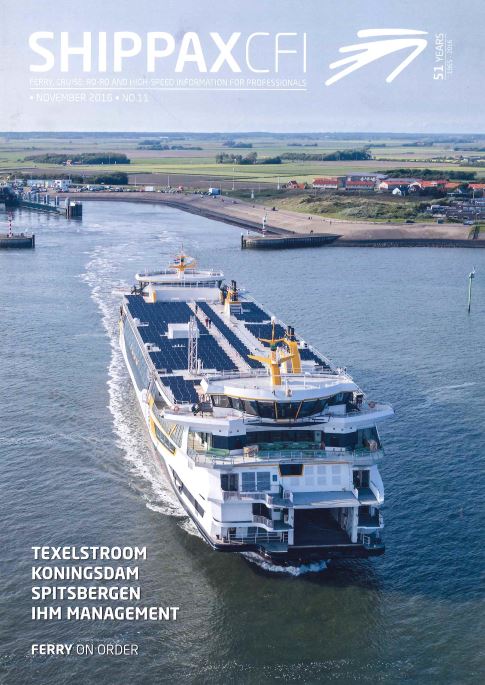
[:en]
OLIVER DESIGN COMPLETES TURNKEY PROJECT FOR FITTING OUT AND INTERIOR DESIGN OF THE “TEXELSTROOM” FERRY, BUILT FOR DUTCH SHIPOWNER TESO
- The Basque naval design and architecture firm has spent over a year and a half to the contract, employing over a hundred staff from different specialities
- Based on an avant-garde design by Dutch firm Vripack, OLIVER DESIGN has drawn up the construction drawings for all passenger and crew areas, adapting them to the rigorous shipbuilding requirements
- As well as using new materials and installing 100% custom-built furniture, the passenger area boasts an imaginative design, inspired by the flora and fauna of the Dutch coast where the ferry will operate
- Some of the most original features include a crèche area designed to simulate a sandy beach, backlit decorative panels featuring local bird life and a large artificial tree in one of the galleries

Bilbao, April 12th 2016.- OLIVER DESIGN, based in Getxo (Basque Country, Spain), which specialises in naval design and architecture, has just completed a turnkey project to fit out and design the interior of the “Texelstroom”, a ferry built for Dutch ship-owner TESO at the Spanish shipyard La Naval. Over the coming days, the vessel will leave for Den Helder (Netherlands), where finishing work will be completed before it goes into service.
The “Texelstroom” is unique in many ways: its symmetrical double-ended design, its use of compressed natural gas and solar panels to make it more energy efficient, and the fact that it is the first vessel of its kind to be built at La Naval. In addition, the ferry will sport a striking state-of-the-art interior design by Dutch firm Vripack, internationally renowned for its yacht designs.
Basque firm Oliver Design was commissioned to fit out the vessel to that design. It has succeeded in meeting strict maritime transport safety regulations while at the same time offering a tough, durable finish for a vessel capable of carrying 1,750 passengers and making several runs a day. The ‘Texelstroom»’ is designed for continuous, very heavy passenger and vehicle transport between the Dutch port of Den Helder and Texel, the largest of the Friesian islands. Texel has a range of tourist attractions, including a nature reserve and spacious beaches. The route serviced is little over two nautical miles, and the ferry will be able to make the return trip in barely an hour.
A year and a half’s work
Oliver Design has devoted over a year and a half’s work to adapting the passenger and crew areas, employing over one hundred staff from different specialities. The company presented its turnkey project for interior fitting-out as part of a bid submitted by La Naval, which beat a dozen other international shipyards to win the contract.
To complete the project, Oliver Design has made over a thousand construction and working drawings at its offices of Getxo (Bizkaia), for the 4,000 square metre main hall on the passenger deck, buffet and crèche areas, weather decks, service areas, the two bridges and the offices, dining area and other crew areas. Around one hundred operators were involved in the assembly work, including inhouse staff and subcontracted specialists from a range of fields.
The materials used are certified by the International Maritime Organization (IMO) and meet requirements on incombustibility, low flame propagation, fume and toxic gas emissions, soundproofing and others demanded by the classification society and the Dutch maritime authorities. Two fire curtains have been installed which, in the event of a fire, will divide the large saloon-deck into three separate zones. Measuring 2.5 metres in height and over 8 metres in length, they are among the largest fire curtains ever to be fitted in a passenger ferry.
Together with the use of materials such as fibreglass, synthetic resin, tempered glass, stainless steel and aluminium, they neatly offset the sophistication of the finish and 100% custom-built ergonomic furniture. The passenger area in particular is remarkable for its imaginative design, inspired by the animal and plant life on the island of Texel which will be served by the ferry.
In implementing Vripack’s concept design, OLIVER DESIGN has had to come up with construction solutions for some very imaginative approaches. The crèche area, for example, uses a seamless resin floor with curved windows to simulate a sandy beach, including real shells gathered from the beaches of Texel. Another striking feature are the decorative panels with backlit pictures of bird life. However, the most remarkable item has to be the large tree presiding over one of the galleries. This is a Mediterranean pine, specially craft-built for this design from treated natural bark and branches, with freeze-dried leaves to ensure conservation.
Más información:
[:]